Founders · Profile
Daymond John: Sewing Hats at Home to Building FUBU
He waited tables at Red Lobster while sewing hats in his mother’s house in Queens. She mortgaged that house to back him, and FUBU became a hip-hop fashion empire.
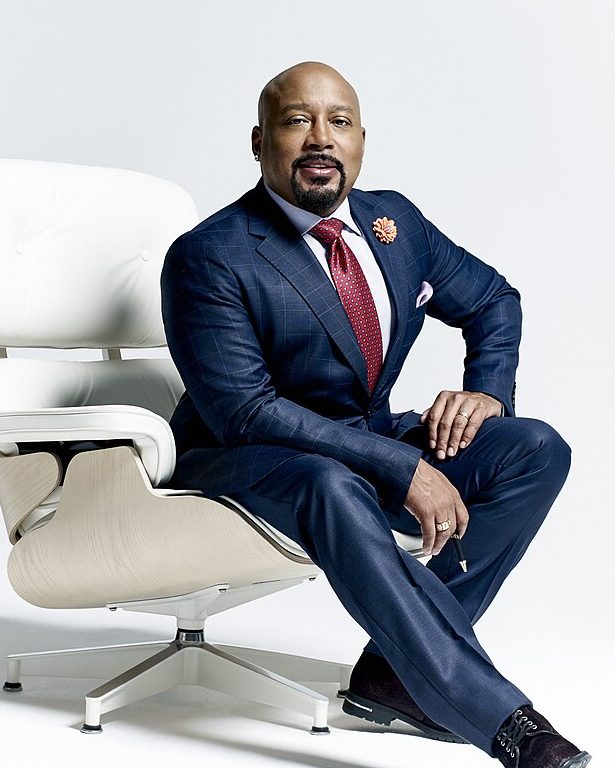
Daymond John’s first factory was his mother’s living room. His first marketing campaign was a famous neighbor. His first investor was his mother, who mortgaged her house because she believed in him. Out of that came FUBU, one of the defining fashion brands of the hip-hop era.
Growing Up in Hollis
John was born in Brooklyn and raised in Hollis, Queens, a neighborhood that also produced hip-hop pioneers like Run-DMC and LL Cool J. His parents divorced when he was young, and his mother raised him. He has dyslexia, which made school a struggle, and he has said it pushed him to find his own ways to succeed.
His mother also taught him to sew, a skill that would turn into a business.
The Hat That Started It
In the early 1990s, John noticed that tie-top hats were popular in hip-hop but expensive. He and a friend sewed their own and sold them on the streets of Queens, where they sold quickly. In 1992 he founded FUBU, short for “For Us, By Us,” with friends J. Alexander Martin, Keith Perrin and Carl Brown.
The brand was built by and for the young people who were shaping hip-hop culture, at a time when major fashion labels largely ignored them.
The House Became a Factory
While building FUBU, John kept working full-time as a waiter at Red Lobster. His mother took out a $100,000 mortgage on their home to fund the business, and part of the house was turned into a factory, with sewers working on the clothes.
John’s smartest early move was marketing. He persuaded LL Cool J, a fellow Hollis native, to wear FUBU. In 1997, LL appeared in a commercial for Gap wearing a FUBU hat and worked the phrase “for us, by us” into his rap, slipping a rival brand into one of the biggest ad campaigns of the year.
From Streetwear to Shark Tank
FUBU grew into a major global brand during the late 1990s. John later became one of the original investors on ABC’s Shark Tank when it premiered in 2009, and he has backed dozens of small businesses on the show. He founded a branding consultancy and became a sought-after speaker and author.
The Power of Broke
In his 2016 book The Power of Broke, John argues that having little money can be an advantage because it forces you to be creative and resourceful. It’s a philosophy he lived. FUBU succeeded on hustle, community and smart marketing rather than a big budget, and his mother’s belief in him gave it the start it needed.
The Takeaways
- Use what you have. FUBU started with a sewing machine and a neighborhood.
- Belief from family can be the first capital a founder gets.
- Great marketing doesn’t have to be expensive. It has to be smart.
The Timeline
- 1969Born in Brooklyn; grows up in Hollis, Queens
- 1992Founds FUBU with three friends
- 1990sHis mother mortgages the family home to fund the business
- 1997LL Cool J wears FUBU in a Gap commercial
- 2009Joins ABC’s Shark Tank as an original investor
- 2016Publishes The Power of Broke
Frequently Asked Questions
What is Daymond John’s net worth?
Major wealth trackers such as Forbes and Bloomberg don’t publish an estimate of Daymond John’s net worth, so we don’t print one. His wealth comes from FUBU, his investments as an original Shark Tank investor, and his branding and speaking businesses.
What does FUBU stand for?
FUBU stands for “For Us, By Us.” Daymond John founded the brand in 1992 with friends J. Alexander Martin, Keith Perrin and Carl Brown.
How did Daymond John fund FUBU?
His mother took out a $100,000 mortgage on their home in Queens, and part of the house was turned into a factory. John kept working at Red Lobster while building the brand.
Sources & Further Reading
This profile is based on publicly available reporting and records, including the sources above. Net worth figures are third-party estimates and change over time. Celebrity Articles is independent and not affiliated with Daymond John. Spot an error? Request a correction.